Forex trading for beginners explained through market microstructure rather than chart patterns
Want articles like this for your own video to promote it on YouTube and Google? Order them through the Telegram bot @sat_sit_bot. The bot writes and publishes the articles itself (with your YouTube video embedded) on popular topical websites (no ads). Your first 50 articles are free.
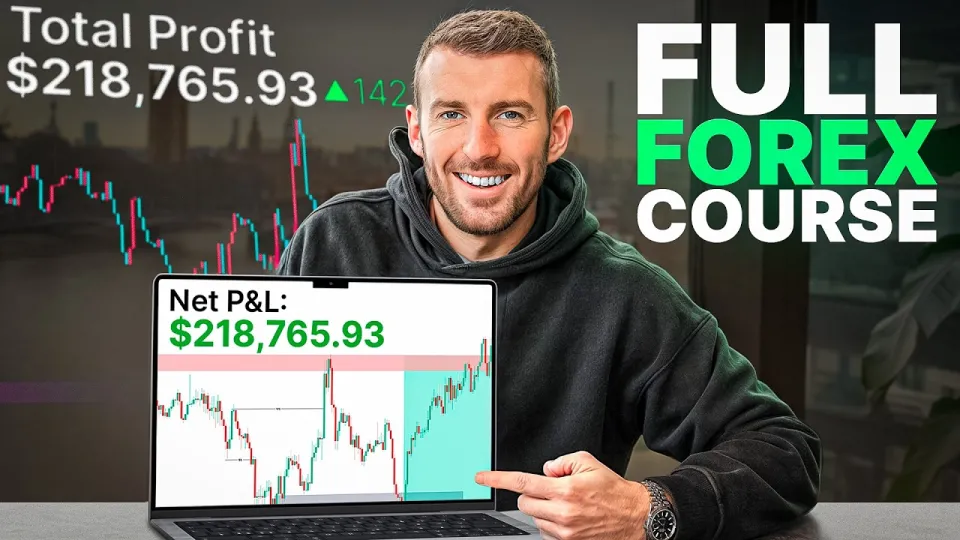
Most beginners should start with forex market microstructure, not chart patterns: the bid/ask spread, the order book and auction theory explain why price moves, while geometric shapes only describe what already happened. Matt Donlevey's Photon Trading guide, published in January 2025, builds a full beginner curriculum on that premise, and the free course plus cheatsheets are available at Photon Trading free training.
What forex trading actually is and who you are trading against
Forex is the exchange of one currency for another in an over-the-counter market where retail traders deal through brokers rather than a single centralized exchange. The guide starts from this definition because it changes what a beginner should study: there is no single tape of all trades, so the broker's quotes and the order book become the primary evidence of supply and demand. The video walks through how much money can realistically be made, how prop firm and funded-account models let traders work with other people's capital, and the basic mechanics of a currency pair. For a beginner, the practical takeaway is that forex is a cost-sensitive, leverage-heavy market where understanding who takes the other side of your trade matters more than memorizing candlestick names.
Why technical analysis gets a bad reputation
The guide argues that technical analysis deserves its poor reputation when it is reduced to drawing geometric shapes that do not explain price movement. A triangle or a head-and-shoulders pattern tells you what the chart looks like, not why buyers or sellers are active at a given price. The alternative presented is to study the underlying dynamics: who is resting orders, where liquidity sits, and how auctions resolve when one side becomes aggressive. Candlesticks are introduced as a compression of that activity, useful only once you understand the order flow they represent. This ordering matters for beginners, because it prevents the common habit of collecting patterns without a model of the market.
Market microstructure, order books and auction market theory
Market microstructure is the study of how quotes, orders and trades interact, and it is the backbone of the beginner material. The guide covers three connected ideas:
- Bid, ask and spread. Every trade begins at a cost, because you buy at the ask and sell at the bid. The spread is the first expense a beginner must account for in any strategy.
- The order book. Resting limit orders and market orders create a visible map of where liquidity is concentrated and where it may be thin.
- Auction market theory and order flow. Price moves as an auction seeking areas where buyers and sellers agree; order flow shows which side is paying up.
These concepts replace pattern-spotting with a testable question: where is liquidity, and what happens when price reaches it? That question is the foundation of the Photon strategy introduced later in the guide.
The Photon strategy toolkit: structure, premium and discount, supply and demand
The strategy section translates market dynamics into repeatable tools. Market structure describes the sequence of highs and lows that defines trend and range, and the guide separates three types of structure so a beginner can classify context before acting. Premium and discount divide a range so that longs are considered in the lower half and shorts in the upper half, which enforces patience instead of chasing price. Multi-timeframe analysis connects the higher-timeframe context with the lower-timeframe trigger. Supply and demand zones mark prices where imbalance previously appeared. Liquidity concepts explain why price often moves toward obvious highs, lows and equal levels before reversing. Finally, trade entries, trade management and money management turn these ideas into a process with defined risk.
Execution basics: broker choice, costs, journaling and psychology
The guide treats execution as a skill separate from analysis. Choosing a broker means comparing regulation, spreads, commissions and execution quality rather than chasing bonuses, and trading costs must be modeled before a strategy is judged profitable. The video shows how to place a trade and then emphasizes two habits that separate serious beginners from hobbyists: backtesting a written trade plan and journaling every trade. On psychology, the guide takes a specific position that resonates with experienced viewers: master the strategy and build an edge first, then work on the psychological side, because discipline without an edge only produces consistent losses. The three common mistakes section rounds out the practical warnings.
Beginner questions this guide answers directly
Several recurring concerns from viewers are addressed by the structure of the course. Beginners often ask whether a three-hour video can replace paid education; the guide's answer is implicit in its scope, covering market mechanics, strategy, risk, broker selection and psychology in one sequence. Others worry about the pace and density of the material, which is why the course is timestamped so each topic can be revisited. A third concern is whether forex is still worth learning when most retail traders lose; the guide's response is that losses usually come from skipping microstructure, risk management and journaling, not from the market being impossible. Finally, viewers frequently ask about funded accounts, and the guide explains the prop firm model as a way to trade other people's money after proving a process.
Useful links
- Free Photon Trading course and cheatsheets
- Photon Trading mentorship
- Photon Trading Telegram channel
- Photon Trading on Instagram
Bottom line
Forex beginners are better served by learning market microstructure, order flow and auction theory before collecting chart patterns, because those concepts explain why price moves and make a strategy testable. The Photon Trading guide by Matt Donlevey organizes that path into market structure, liquidity, entries, risk, execution and psychology, with a free course and cheatsheets as the entry point. Start with the free material at photontradingfx.com/free-training, write a trade plan, backtest it, and journal the results before increasing risk. The channel Matt Donlevey - Photon Trading is the author of this breakdown and the source for the framework described here.
Key takeaways
- Retail forex is an over-the-counter market where brokers quote bid and ask prices; the spread is the first trading cost every beginner pays.
- Geometric chart patterns do not explain why price moves; order book mechanics and auction market theory do.
- The Photon Trading beginner guide is a three-hour structured course covering market structure, liquidity, entries, risk and psychology.
- A trading plan, backtesting and a journal are presented as non-negotiable steps before risking real money.
- The free Photon Trading course and cheatsheets are available at photontradingfx.com/free-training.
Source: Beginners Guide To Forex Trading In 2026 (+3 hours) · Markdown version
Questions & answers
Is a three-hour beginner forex course enough to start trading?
It is enough to build a structured foundation if you treat it as a curriculum rather than entertainment. The Photon Trading guide covers market mechanics, strategy, risk and psychology in one sequence, but you still need to backtest a written plan and journal trades before risking meaningful capital. Expect several weeks of practice after the video, not immediate profitability.
Why do so many traders say technical analysis does not work?
Technical analysis fails when it is limited to geometric patterns that describe the chart without explaining order flow. The guide argues that price moves because of liquidity, order book dynamics and auction behavior, so patterns should be read as evidence of those forces. Once you study microstructure, chart reading becomes a tool for locating liquidity rather than a standalone prediction method.
Should I focus on trading psychology or on building a strategy first?
Build and test a strategy first, then work on psychology. Discipline applied to a system without an edge only produces consistent losses, which is why the guide places money management and trade planning before the psychology section. Once you have a backtested process, psychological work helps you execute it consistently.
What costs should a forex beginner account for before choosing a broker?
The spread is the first cost, because you buy at the ask and sell at the bid, and it directly reduces every trade's result. Compare commissions, execution quality and regulation rather than promotional bonuses, and model these costs in your backtest. A strategy that looks profitable before costs can turn negative once spread and commission are included.